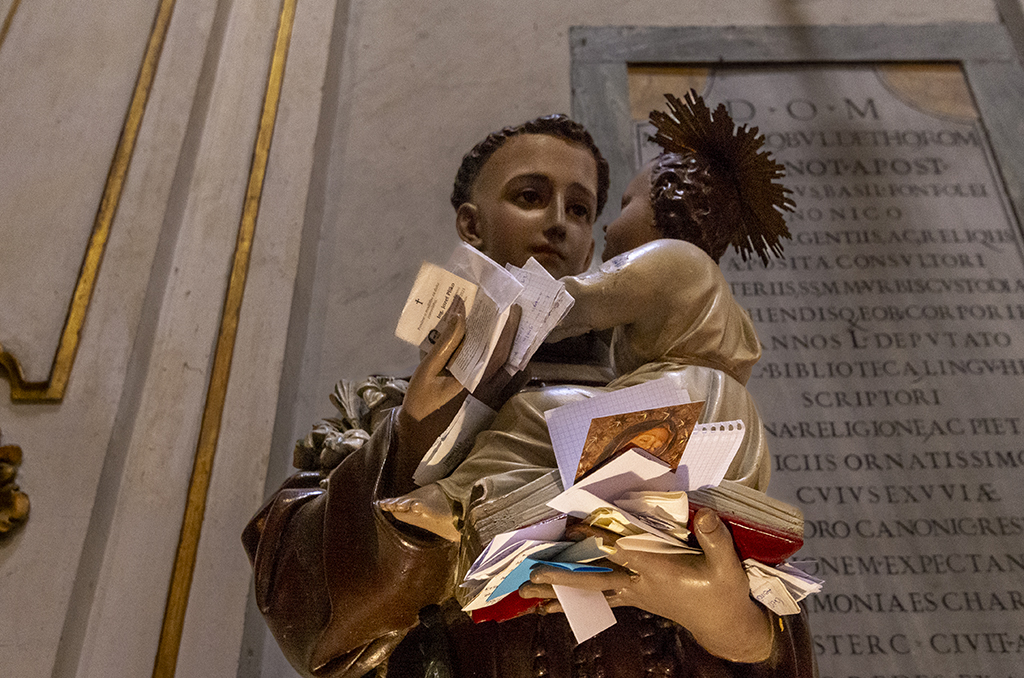
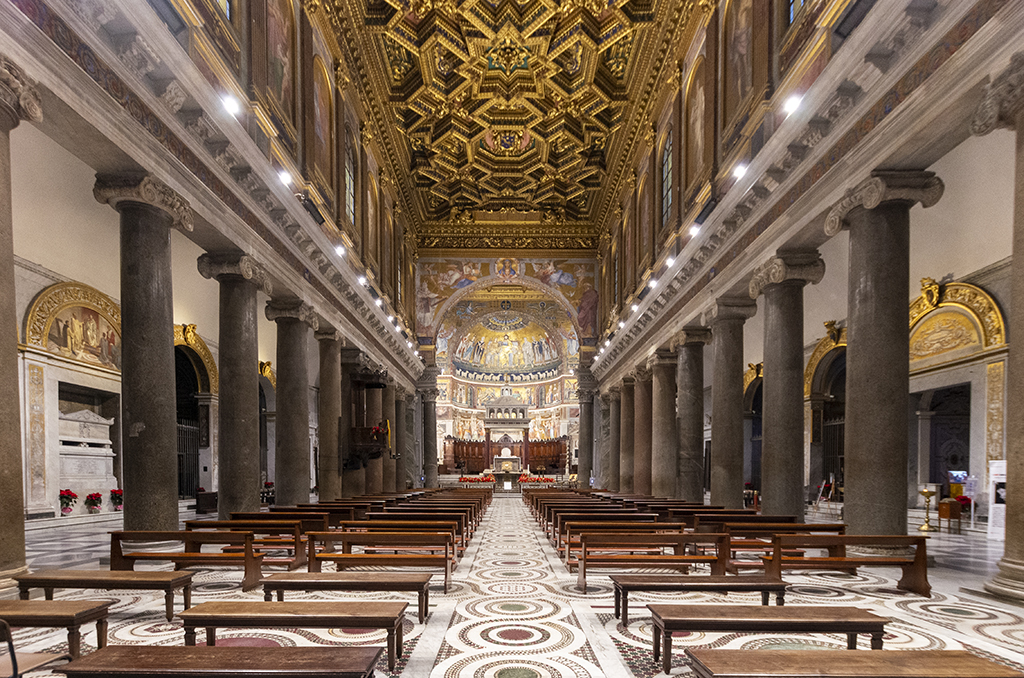
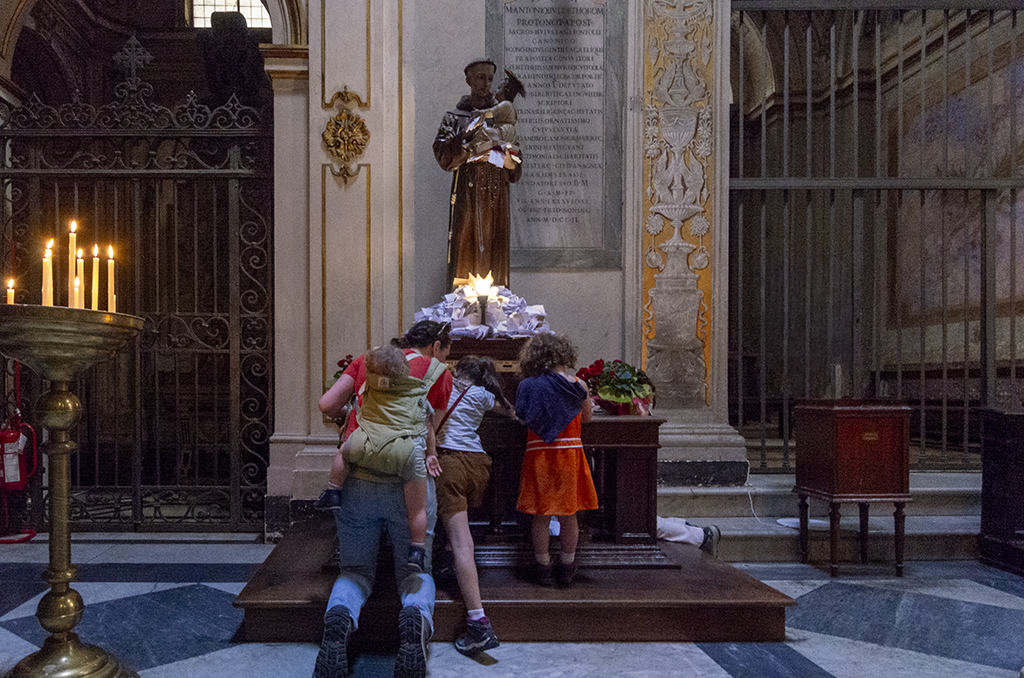
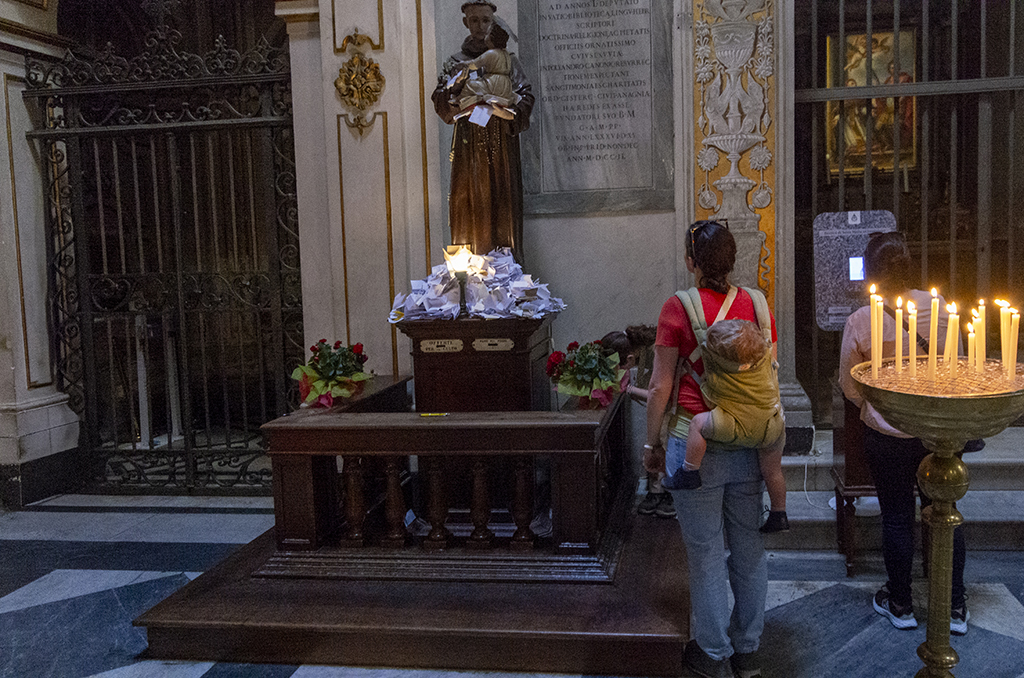
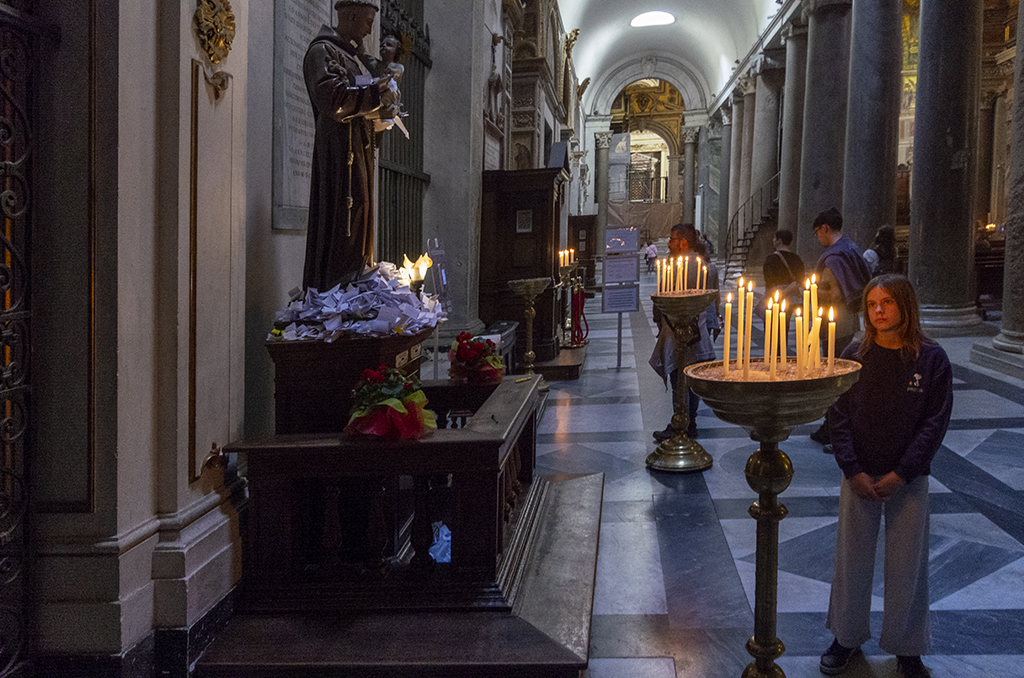
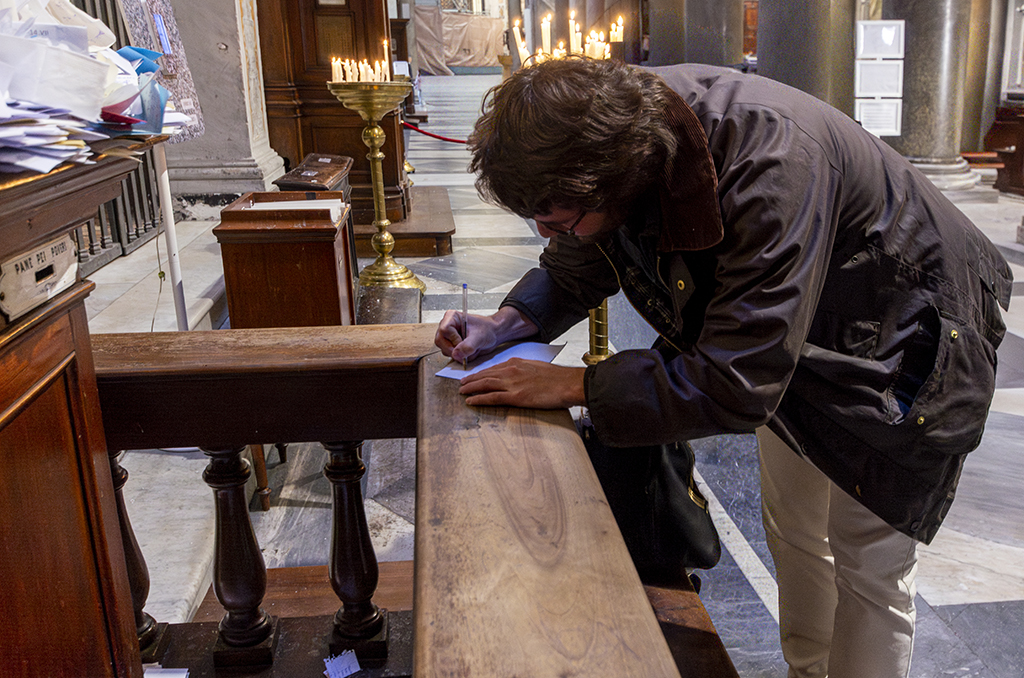
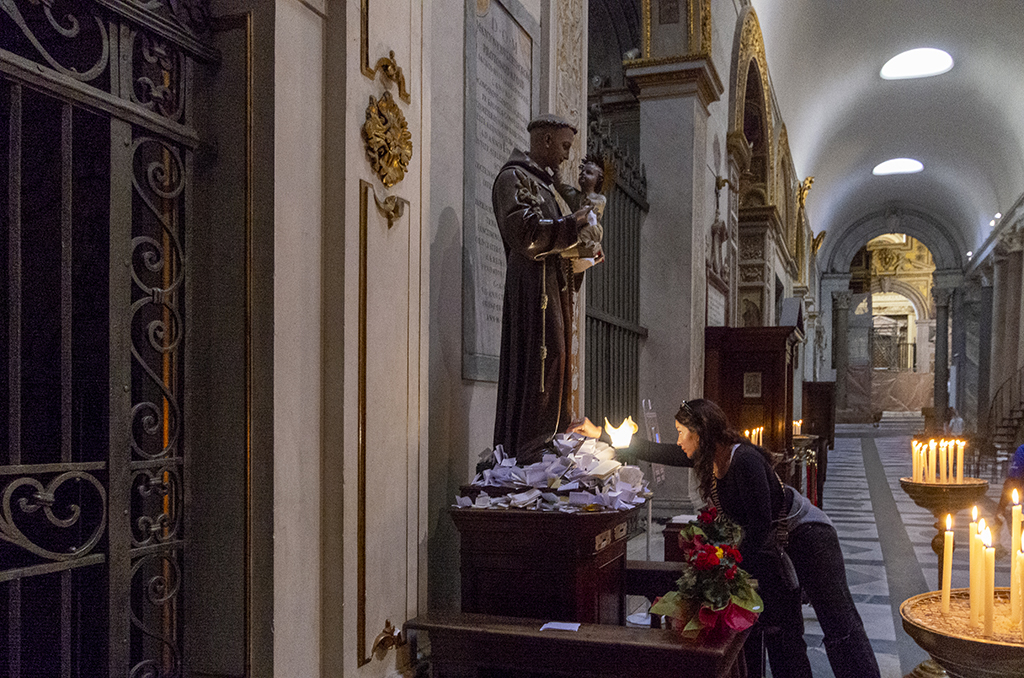
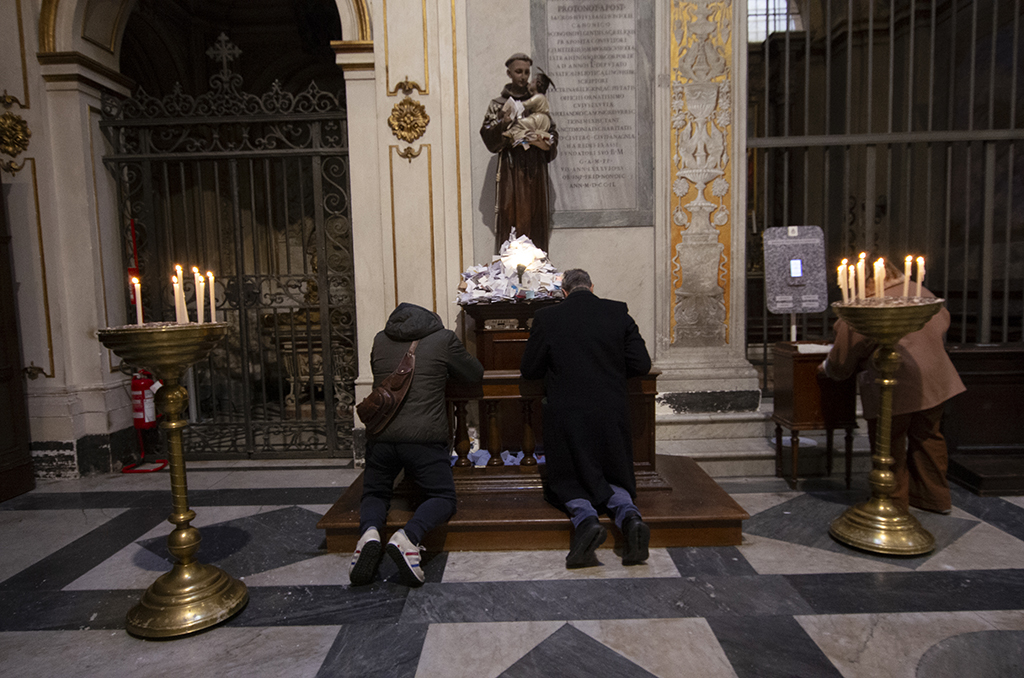
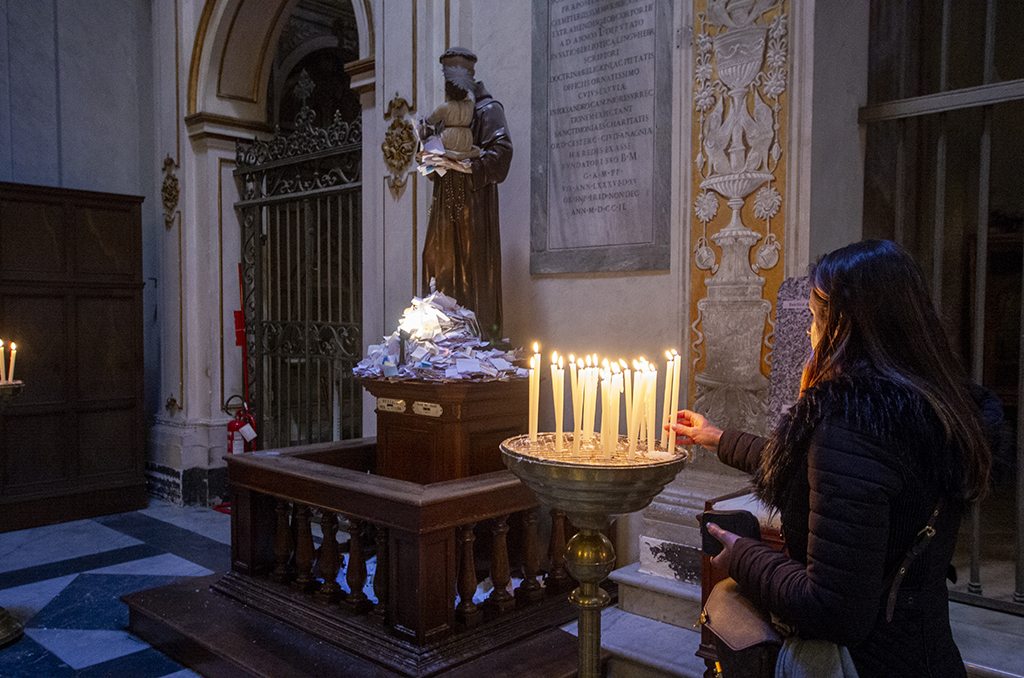
Nella Basilica di Santa Maria in Trastevere (RM), si incontra una figura discreta, ma incredibilmente potente: la statua di Sant’Antonio di Padova con il Bambino Gesù. Un “confessionale a cielo aperto“, simbolo di speranza e di preghiera.
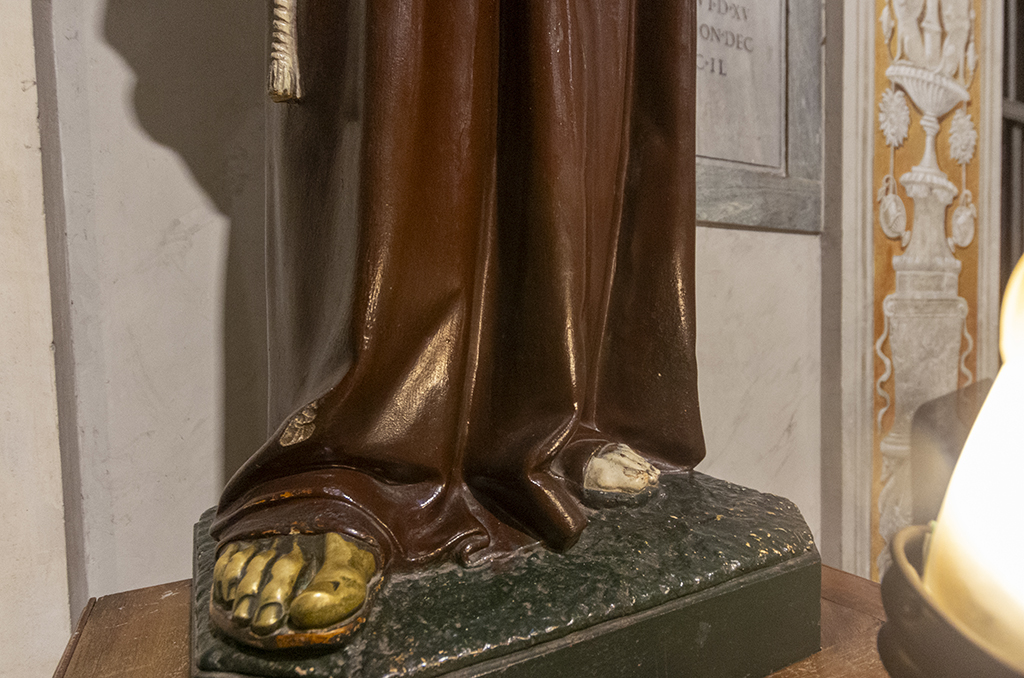
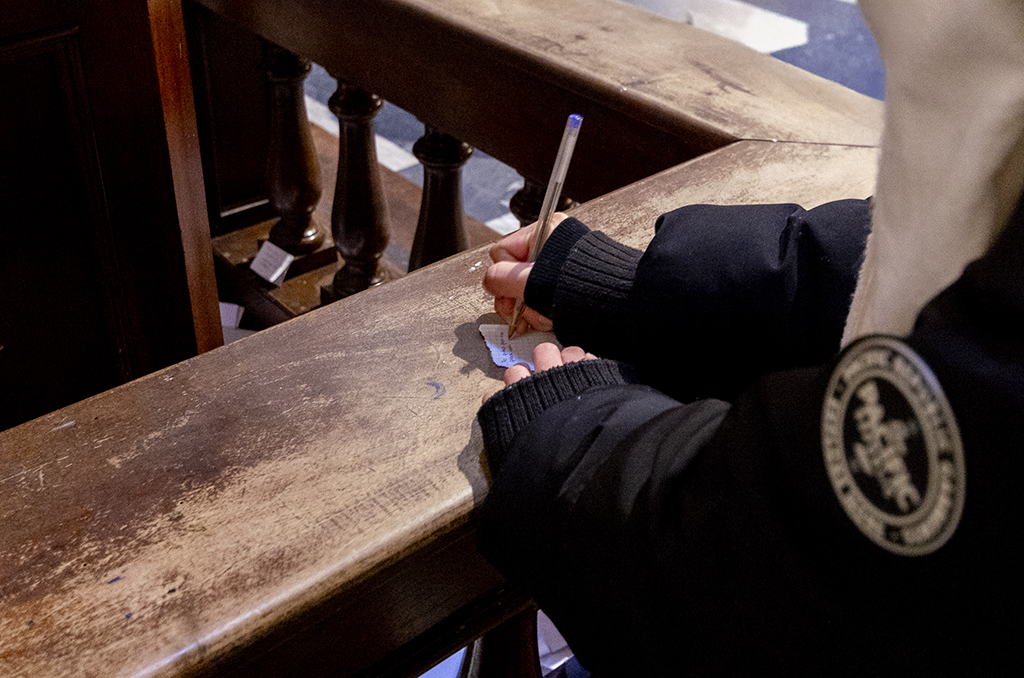
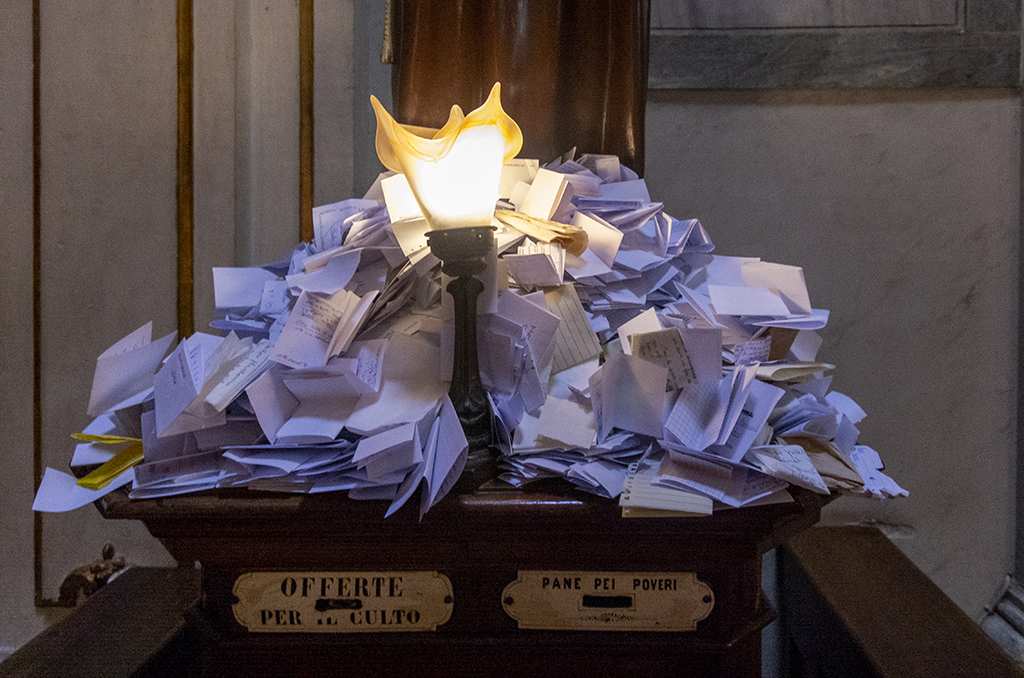
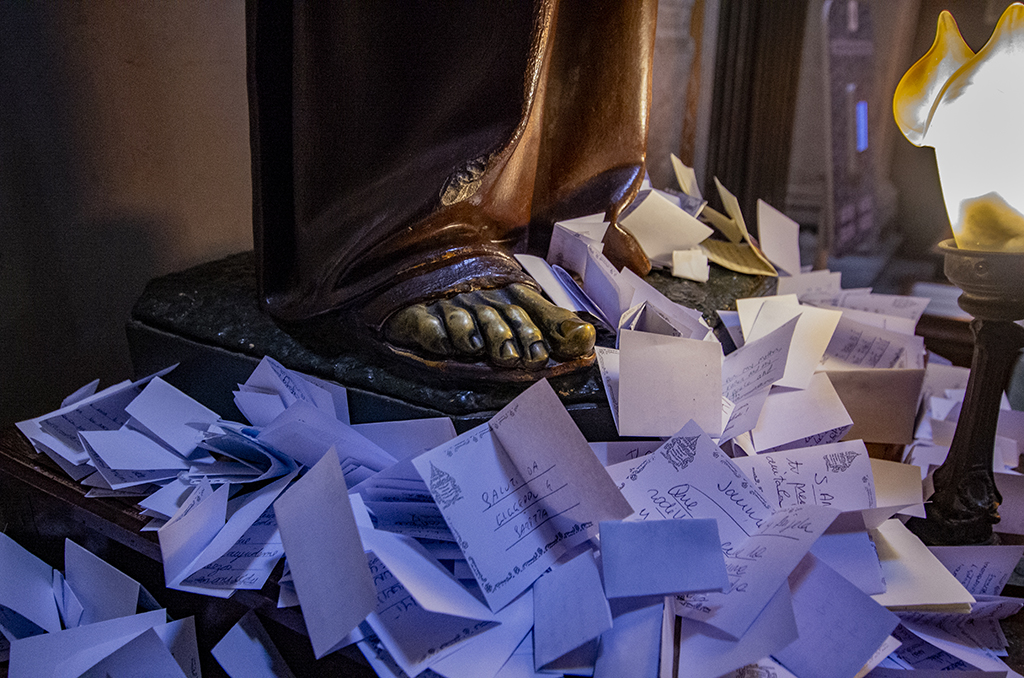
Ogni giorno, il saio del Santo, i suoi piedi, le pieghe della veste, sono ricoperti da centinaia di bigliettini: desideri, suppliche, promesse e, soprattutto, richieste d’amore.
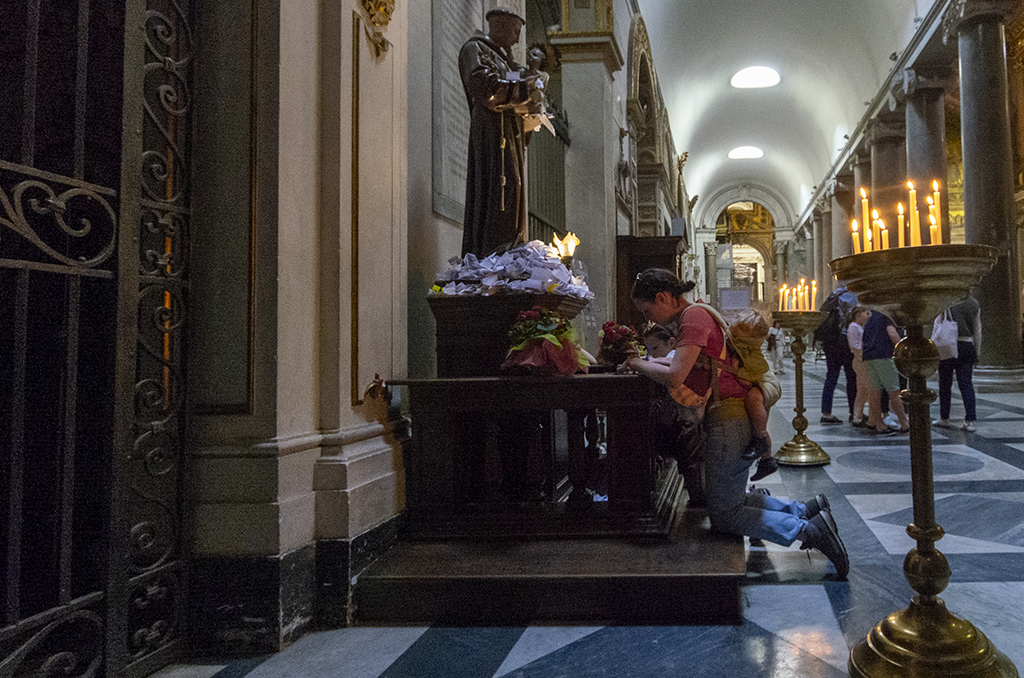
Uomini e donne si rivolgono a Sant’Antonio, chiedendo aiuto per incontrare l’anima gemella o per trovare “l’amore vero”.
Una tradizione viva, soprattutto tra i fedeli sudamericani e iberici, più tramandata dai gesti che dalle parole scritte, più dal passaparola che dai libri.
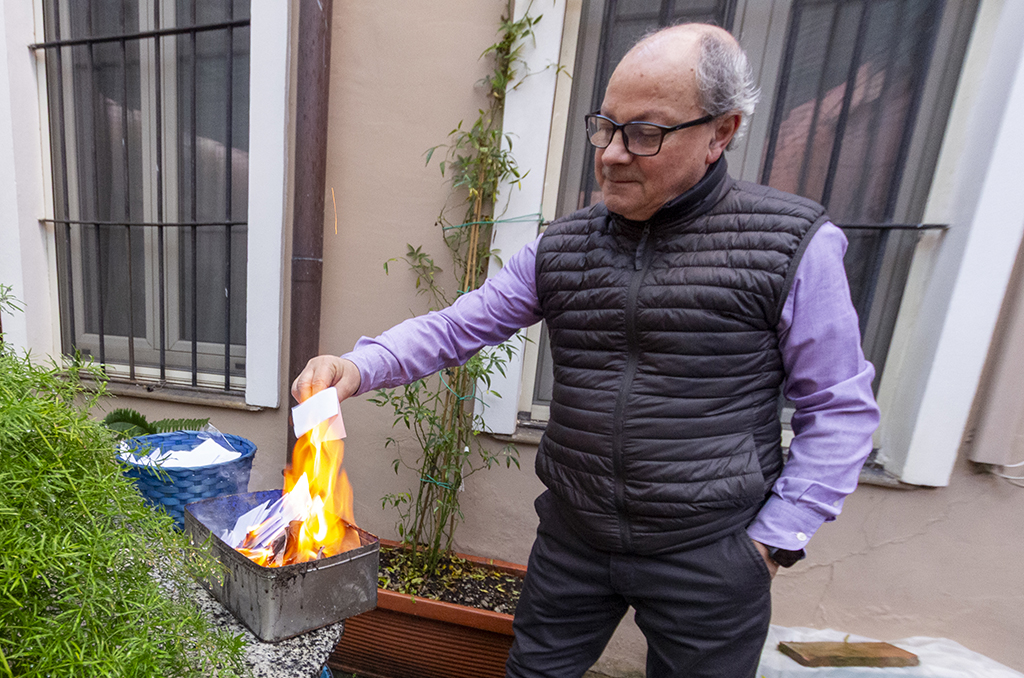
Dopo qualche giorno, i bigliettini vengono raccolti con cura, riposti in un contenitore e poi bruciati. Le preghiere salgono così al Santo, portando con sé speranze e desideri.
Lontano dal caos della città, Sant’Antonio continua ad ascoltare.
Roma, ancora una volta, custodisce una fede antica, umana e viva.
In the Basilica of Santa Maria in Trastevere (Rome), one encounters a discreet yet incredibly powerful presence: the statue of Saint Anthony of Padua with the Child Jesus. An “open-air confessional”, a symbol of hope and prayer.
Every day, the Saint’s habit, his feet, the folds of his robe are covered with hundreds of little notes: wishes, supplications, promises and, above all, requests for love.
Men and women turn to Saint Anthony, asking for help in meeting their soulmate or in finding “true love”.
A living tradition, especially among South American and Iberian worshippers, passed down more through gestures than through written words, more by word of mouth than by books.
After a few days, the notes are carefully collected, placed in a container and then burned. In this way, the prayers rise to the Saint, carrying hopes and desires with them.
Far from the chaos of the city, Saint Anthony continues to listen.
Rome, once again, safeguards an ancient, human and living faith.